My Pharmacist Friend Dumped Half Our Medicine Cabinet Into a Paper Bag — Here's What She Kept
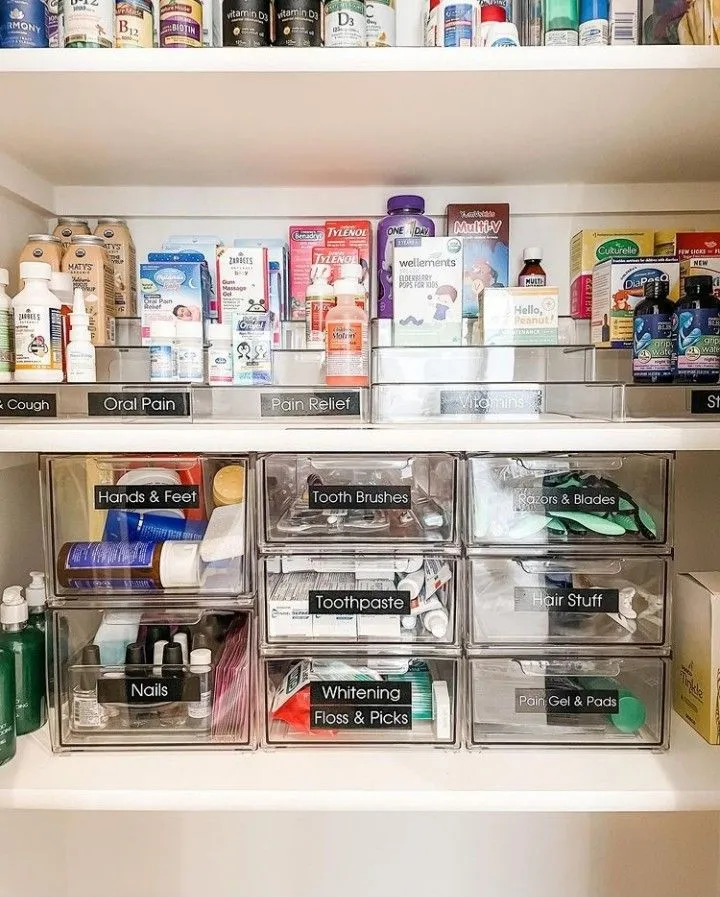
Photo: organized home medicine cabinet with first aid supplies on bathroom shelf, via i.pinimg.com
My friend Dana and I go way back — we were roommates in college before she went off to pharmacy school, and now she's the person I text at odd hours when one of my kids has a mystery rash. So when she visited last month, I didn't think twice about leaving the bathroom door open.
Big mistake.
She stood at our medicine cabinet for a solid minute, then started laughing. "Anne, we need to talk," she said, and pulled out a bottle of children's ibuprofen that expired the year my youngest was born.
What followed was a twenty-minute masterclass in what a real family medicine cabinet should look like. I took notes on the back of a receipt, and now I'm sharing them with you.
Why This Actually Matters (More Than I Thought)
I'll admit, my first reaction was "it's just a few expired bottles, who cares?" Turns out, Dana cares a lot.
Expired medications don't just lose potency — some actually change chemically over time. And the bigger issue? When your cabinet is stuffed with fifteen half-used things, nobody in the house can find the right medicine at 2 a.m. when a fever spikes. Clutter isn't just messy; it's a safety problem, especially with kids around.
Step One: Pull Everything Out (Yes, Everything)
Take every single item out of the cabinet and line it up on the counter. Dana made me do this before she'd even start talking. Seeing it all in one place was genuinely shocking — I counted 34 items. Thirty-four!
Check three things on each one:
- The expiration date. Not the "best by" estimate you're hoping for — the actual printed date.
- Whether it's been opened. Eye drops, liquid medicines, and anything with an applicator have shorter lifespans once opened, even if the printed date is far off.
- Whether it's stored properly. Bathrooms are humid and warm, which degrades medicine faster than you'd think. Cool, dry closets are actually better.
The Pile for the Paper Bag
Here's what went into Dana's toss pile from our house:
- Anything expired, full stop. Including that "emergency" antibiotic from a leftover prescription — which, by the way, you should never self-prescribe anyway.
- Duplicate supplements. We had a multivitamin, a "women's blend," and a gummy that all overlapped. Dana pointed out we were accidentally doubling up on certain nutrients, which isn't harmless.
- Mystery items. Unlabeled droppers, a cream in a foreign language, something crusty in a travel-size bottle. If you can't identify it, you can't safely use it.
- Refrigerated leftovers. Old liquid antibiotics that were supposed to be tossed after two weeks. They were three years old.
What Stayed: The Five-Item Starter Kit
According to Dana, most US households really only need a small core stock:
- A digital thermometer (with fresh batteries — check them twice a year)
- Acetaminophen and/or ibuprofen, in adult and children's versions if you have kids
- An antihistamine for allergic reactions, like diphenhydramine or loratadine
- Adhesive bandages, gauze, and medical tape — the boring basics that get used constantly
- Oral rehydration solution or electrolyte packets for stomach bugs, which every family of four seems to host at least once a winter
That's it. Everything else, she said, is either situational or marketing.
Safe Disposal: Don't Just Trash It
This was the part I genuinely didn't know. The FDA recommends two main routes for getting rid of old medications:
- Drug take-back programs. Many pharmacies, hospitals, and police stations have drop boxes. The DEA also runs National Prescription Drug Take Back Days twice a year, usually in April and October.
- At-home disposal when take-back isn't an option: mix the medication with something unappealing like used coffee grounds or cat litter, seal it in a bag, and toss it. Most medicines can go in household trash this way; the FDA keeps a short list of specific drugs that should be flushed instead.
One more tip from Dana: peel the labels off or black out personal info before tossing bottles. Pharmacists worry about that stuff.
Your 15-Minute Cabinet Checklist
Want to do your own clean-out this weekend? Here's the quick version:
- Empty the cabinet completely onto a clear surface
- Toss anything expired or unidentifiable
- Consolidate duplicate supplements and medicines
- Verify you have the five essentials listed above
- Check thermometer batteries and bandage supply levels
- Drop off expired meds at a take-back location
- Wipe down the shelf and put everything back — labeled side out
The Part Nobody Expects: How Good It Feels
I expected the clean-out to feel like a chore. Instead, it felt like decluttering a junk drawer and finding out the drawer was full of things that might have quietly hurt us.
Now our cabinet holds maybe a dozen items, everything is in date, and when someone wakes up sick, I can find what I need in about four seconds. My kids know the cabinet is off-limits, and the important stuff is up high anyway.
Dana's parting words: "Do this every spring. Put it on the calendar next to the smoke detector batteries."
So I did. First Sunday of April, right after daylight saving time chaos ends. The cabinet, the batteries, the whole household reset — one hour, once a year, and the peace of mind lasts the other 364 days.
Have you checked your medicine cabinet lately? I'm betting there's a bottle in there with a date older than your kindergartner.